Creative Strategy Updates April 2026 Meta
Creative Strategy for Meta Ads in April 2026: How the Algorithm Selects Your Audience
Who This Article Is For
If you are a small business owner spending at least $1,000 per month on Meta ads and your CPA is not improving despite campaign restructuring, this article is directly relevant to your situation. The core problem is almost always creative strategy, not targeting configuration.
FBAdsMaster publishes free, systems-level guidance for small business owners running their own Meta ad accounts. At the end of this article, you will find information about our partnership with Affilicademy, which offers performance-based ad management for qualifying businesses.
Creative Strategy Updates April 2026 Meta
Creative Strategy for Meta Ads in April 2026: How the Algorithm Selects Your Audience
Why the Algorithm Outperforms Manual Targeting in 2026
Real Campaign Data: Four Ecommerce Accounts
Account 1 — Skincare Subscription Box
Account 2 — Home Office Ergonomic Chair
Account 3 — Children's Educational Activity Kits
Account 4 — Men's Grooming Subscription
Understanding Hit Rate as a Production System
Practical Implementation: Building a Creative Strategy System
Step 1 — Define the ICP with Operational Specificity
Step 2 — Structure Tests Across Levels of Awareness
Step 3 — Isolate Variables in Testing
Step 4 — Define Your Winner Threshold Before Testing
Step 5 — Calculate and Meet Your Weekly Production Requirement
Step 6 — Increase Testing Volume Alongside Spend
Just the Most Important Bits
1. What is creative strategy on Meta ads in 2026? Creative strategy is the structured process of designing ad content — hook, on-camera representation, copy, and visuals — to generate engagement signals that guide Meta's algorithm toward the correct audience. In April 2026, creative strategy is the primary targeting mechanism on the platform.
2. Does interest targeting still work on Meta in 2026? Interest targeting remains available in Ads Manager, but it now functions as a constraint on the algorithm rather than a precision tool. Broad delivery paired with strong creative consistently produces lower CPA and better scalability than manually defined interest stacks under current algorithm conditions.
3. What is ad hit rate and why does it matter? Hit rate is the percentage of tested creatives that meet your predefined performance benchmark. It is the controlling variable in your entire creative production system. If your hit rate is 20%, you must test five ads for every one winner you need. If your hit rate is 2%, you must test fifty.
4. How many creatives should a small business test per week in 2026? The correct testing volume is determined by this formula: Desired Winning Ads ÷ Hit Rate = Required Tests. A business targeting three to five winning ads per week with a 20% hit rate needs fifteen to twenty-five tests per week. Testing volume must increase alongside spend to prevent performance ceilings.
5. What makes a creative strong enough to drive algorithmic targeting? Strong creative for algorithmic delivery contains a specific ICP represented visually on camera, a hook in the first three seconds that speaks to a felt problem, clean production quality that establishes baseline credibility, and ad copy written around a specific outcome rather than a general brand message.
6. What is the Andromeda algorithm and how does it affect creative strategy? Andromeda is Meta's current ad delivery system, operational since 2025. It processes behavioral signals at a scale that manual interest selection cannot replicate. Andromeda learns from creative engagement data and self-selects the audience. Creative quality is now the primary input the system uses to determine delivery.
7. What is a realistic hit rate target for a well-run creative system? A well-structured creative system with clear ICP definition and proper levels-of-awareness targeting should produce a hit rate between 15% and 35%. Hit rates below 10% indicate systemic issues with messaging, structure, or creative quality — not random variance.
8. How does creative strategy reduce CPA on Meta ads? Strong creative generates high-quality engagement signals that lower CPM (through better relevance scoring), increase CTR (through specific hooks and ICP alignment), and improve conversion rate (through message continuity from ad to landing page). Each lever compounds to reduce CPA without requiring audience manipulation.
Introduction
Creative strategy on Meta ads in April 2026 refers to the deliberate construction of ad content to function as the primary audience selection mechanism. This represents a structural shift from how most small business owners were trained to run Facebook ads. The legacy model treated targeting — interests, behaviors, demographics — as the core lever. The current model treats creative execution as the lever, and algorithmic delivery as the distribution system that responds to it.
This matters for small business owners because the implications are practical and immediate. If your current approach to Meta advertising prioritizes audience segmentation over creative development, your system is misaligned with how the platform currently operates. The result is higher CPMs, constrained scale, and CPA that does not improve regardless of how many audience configurations you test.
This article explains the mechanics of creative strategy as it applies to Meta ads in 2026, provides real campaign data from accounts we have managed, and outlines a production system for generating winning creatives at predictable rates.
Why the Algorithm Outperforms Manual Targeting in 2026
Meta's Andromeda system processes behavioral signals at a volume and complexity that manual interest targeting cannot approximate. When a user watches 80% of a video ad, pauses, then clicks, Andromeda logs that response and uses it to identify other users with similar behavioral profiles. When a user scrolls past immediately, that signal is logged as well. The system updates these user models continuously, across every session.
Manual interest targeting places demographic and behavioral guardrails around this system. Those guardrails do not correspond to how buyers actually behave. A person interested in "fitness" is not necessarily in the market for a supplements subscription. A person interested in "entrepreneurship" is not necessarily running a business. Interest labels are proxy data. Behavioral signals from your actual creative are primary data. Andromeda is built to work with primary data, and it performs measurably better when given access to it.
The practical consequence is that interest targeting now functions as a ceiling on delivery, not a filter for quality. When you define a narrow audience, you reduce the volume of behavioral data the algorithm can work with, slow down the learning phase, increase CPMs due to competitive density within that audience, and prevent Andromeda from finding buyer segments you did not anticipate. Broad targeting with strong creative removes those constraints.
The shift is not a recent development. Meta's algorithm updates over the eighteen months preceding April 2026 moved consistently toward broader delivery parameters and reduced weighting on manual audience inputs. Advertisers who restructured their systems around creative development during that period are operating at lower CPAs and higher scale than those who maintained legacy targeting configurations.
Real Campaign Data: Four Ecommerce Accounts
The following data comes from four ecommerce accounts managed through our campaigns. All figures are drawn from actual campaign reporting periods.
Account 1 — Skincare Subscription Box
Product: Monthly curated skincare subscription targeting women 35–55 with sensitive skin concerns. Retail Price: $64/month COGS: $22 Gross Margin: 65.6% AOV: $64 (first order) / $192 (90-day LTV)
Campaign Performance (90-day period):
Ad Spend: $18,400
Revenue: $73,600
ROAS: 4.0
CPA: $29.40
CTR: 2.8%
CPM: $14.20
Conversion Rate: 3.6%
Creative Testing:
Creatives Tested: 44
Winners (met CPA benchmark): 9
Hit Rate: 20.5%
Key Insight: The account had been running with layered interest targeting (beauty, skincare, anti-aging) for six months prior. CPM averaged $22.80 under that configuration. Moving to broad delivery with an on-camera spokesperson who matched the ICP — a woman in her mid-40s discussing the frustration of product sensitivity — reduced CPM by 37.7% and increased CTR from 1.4% to 2.8% within the first three weeks. The creative trained the algorithm to find the audience. Interest targeting had been excluding high-value buyers who did not carry the expected interest labels.
Account 2 — Home Office Ergonomic Chair
Product: Premium ergonomic office chair targeting remote workers and home office professionals. Retail Price: $449 COGS: $161 Gross Margin: 64.1% AOV: $449 LTV (12-month): $510 (includes add-on accessories)
Campaign Performance (60-day period):
Ad Spend: $22,100
Revenue: $79,560
ROAS: 3.6
CPA: $124.80
CTR: 1.9%
CPM: $18.60
Conversion Rate: 1.1%
Creative Testing:
Creatives Tested: 38
Winners: 7
Hit Rate: 18.4%
Key Insight: This account had a high-ticket product with a considered purchase cycle. The initial creative approach led with product features — adjustability, lumbar support, material quality. CTR on feature-led creatives averaged 0.9%, producing a CPA of $218. Restructuring creative around the ICP problem — chronic back pain from 8-hour remote work days — and placing a remote worker in their 30s on camera describing the experience before and after, increased CTR to 1.9% and reduced CPA to $124.80. The product features appeared later in the ad, after the problem frame was established. The hook drove the algorithm. The product details closed the conversion.
Account 3 — Children's Educational Activity Kits
Product: Monthly activity kit subscription for children ages 4–10, positioned toward parents who prioritize screen-free learning. Retail Price: $38/month COGS: $13 Gross Margin: 65.8% AOV: $38 (first order) / $304 (annual LTV)
Campaign Performance (120-day period):
Ad Spend: $14,200
Revenue: $61,040
ROAS: 4.3
CPA: $22.10
CTR: 3.4%
CPM: $11.80
Conversion Rate: 4.8%
Creative Testing:
Creatives Tested: 30
Winners: 10
Hit Rate: 33.3%
Key Insight: This account achieved the highest hit rate of the four due to two structural factors. First, the ICP was clearly defined before any creative was produced: a parent aged 28–40 who is frustrated by the amount of screen time their child accumulates and is looking for structured alternatives. Second, the account tested across levels of awareness systematically — unaware, problem aware, and solution aware — rather than running one type of creative broadly. The result was a hit rate 60% above the target benchmark, a CPM well below platform average due to engagement quality, and a CPA that remained stable as ad spend increased.
Account 4 — Men's Grooming Subscription
Product: Monthly grooming essentials subscription for men 25–45. Retail Price: $29/month COGS: $9 Gross Margin: 69% AOV: $29 (first order) / $232 (annual LTV)
Campaign Performance (90-day period):
Ad Spend: $11,600
Revenue: $40,600
ROAS: 3.5
CPA: $18.40
CTR: 2.1%
CPM: $13.50
Conversion Rate: 2.8%
Creative Testing:
Creatives Tested: 52
Winners: 8
Hit Rate: 15.4%
Key Insight: This account initially ran with a 6.2% hit rate over the first testing cycle due to a common structural error: the creative was brand-focused rather than problem-focused. The ad opened with a product shot and brand name. ICP representation on camera was absent. After restructuring creative around a 30-something man describing the inconvenience of managing grooming across multiple products, hit rate increased from 6.2% to 15.4% in the following cycle. The CPA dropped from $41.20 to $18.40. No audience changes were made. The only variable was creative structure.
Understanding Hit Rate as a Production System
Hit rate is the metric that connects creative quality to predictable output. Most operators treat ad testing as a qualitative exercise — they produce ads, run them, and evaluate results informally. Hit rate converts that process into a measurable input-output system.
The formula is straightforward:
Required Tests = Desired Winners ÷ Hit Rate
If you need four winning creatives per week and your hit rate is 20%, you must test twenty ads per week. If your hit rate is 10%, that requirement doubles to forty. If your hit rate is 2% — which some sources cite as an industry benchmark — you need two hundred ads per week to produce four winners. That volume is not sustainable for a small business operating without a large creative production operation.
The industry 2% figure reflects systems with poor ICP definition, no levels-of-awareness structure, and minimal creative iteration. It is not a benchmark to accept. A structured creative system with clear ICP alignment and proper testing methodology should produce a hit rate between 15% and 35%. The four accounts above averaged 21.9% across the testing periods documented.
Hit rate is not fixed. It improves as your system compounds learning. Winning ads inform the structure of future tests. Patterns in hook engagement, on-camera performance, and messaging alignment accumulate as operational knowledge. Each testing cycle should produce incrementally better inputs for the next.
The floor threshold worth noting: hit rates below 10% indicate a systemic problem, not normal variance. Common causes include ICP that has not been defined with sufficient specificity, creative that leads with brand or product rather than problem, testing multiple variables within a single creative (which dilutes signal clarity), and absence of levels-of-awareness structure across the testing set.
Practical Implementation: Building a Creative Strategy System
Step 1 — Define the ICP with Operational Specificity
ICP for ad purposes means a single person, described in enough detail that a creative team can put them on camera. This is not a demographic range. It is a person with a specific problem, at a specific stage of awareness about that problem, with a specific emotional state driving the search for a solution.
For the skincare account above, that person was a 43-year-old woman who had tried three or four products that caused reactions and was frustrated with the cycle of trial and error. That description generated ad hooks, on-camera casting choices, and copy decisions that the algorithm could use to identify real buyers.
Vague ICP produces vague creative. Vague creative produces vague delivery.
Step 2 — Structure Tests Across Levels of Awareness
Levels of awareness refer to where a potential buyer is in their understanding of their problem and available solutions. An unaware buyer does not yet recognize they have the problem your product solves. A problem-aware buyer recognizes the problem but has not yet evaluated solutions. A solution-aware buyer is actively comparing options. Each level requires a different creative approach.
Running all ads at one awareness level caps the addressable audience. The children's activity kit account above maintained a 33.3% hit rate in part because it tested systematically across three awareness levels, covering different buyer entry points with appropriately structured creative for each.
Step 3 — Isolate Variables in Testing
Each creative test should change one element at a time relative to a control. If you change the hook, the on-camera person, and the offer simultaneously, you cannot identify which variable produced the result. Signal clarity is the operating principle.
A practical batch structure for a 20-creative test cycle: six variations on hook language with consistent visual format, six variations on on-camera ICP representation with consistent copy, and eight variations covering different awareness levels with the strongest-performing hook from the previous batch.
Step 4 — Define Your Winner Threshold Before Testing
A winning creative must be defined before you launch the test, not after you see results. Set a CPA threshold based on your gross margin and required ROAS. Any creative that hits that threshold within the evaluation window is a winner. Any creative that does not is not. Evaluate based on predefined criteria, not relative performance within the batch.
Step 5 — Calculate and Meet Your Weekly Production Requirement
Using the formula above, determine the number of tests required each week to hit your winner target. Build backward from that number to understand production requirements: scripts, filming sessions, editing output. If your current production capacity does not meet the required testing volume, the constraint is supply, not strategy.
Step 6 — Increase Testing Volume Alongside Spend
As your ad spend increases, creative fatigue accelerates and the algorithm requires more winning ads to sustain performance without degrading CPA. A budget at $500/day may run adequately on three to four winning creatives. A budget at $3,000/day may require ten or more. Scale your testing program before you scale your spend, not after performance begins declining.
Common Structural Errors in Creative Strategy Execution
Launching broad delivery without a developed creative system. Broad targeting works when the creative is strong enough to generate usable engagement signals. Deploying broad delivery on weak creative does not produce better results than interest targeting — it produces faster failure. The creative system must be functional before the targeting approach matters.
Using brand or product-first hooks. The opening seconds of an ad determine whether the algorithm receives a strong engagement signal or a weak one. Ads that open with a brand name, product shot, or tagline generate lower watch rates from the relevant audience. Ads that open with a specific problem statement or a recognizable person generate higher watch rates and stronger behavioral signals for Andromeda to work with.
Conflating creative volume with creative quality. Increasing the number of ads tested does not improve hit rate. Hit rate improves when the inputs to creative development improve: ICP clarity, awareness-level structuring, hook specificity, and iteration based on winning patterns. Operators who respond to poor hit rate by increasing testing volume without improving creative structure will generate more losing ads at higher cost.
Abandoning broad delivery too early. A common error pattern: broad creative runs for one to two weeks, produces mediocre early results, and the operator layers in interest targeting to tighten performance. Short-term CPA may improve because the audience is smaller and the algorithm has less variance to work through. Scale ceiling drops substantially in the process. The learning phase for broad delivery requires adequate time and sufficient conversion volume. Interrupting it with audience restrictions resets the learning process and compounds the inefficiency.
Running identical creative for too long. Creative fatigue is audience-level exhaustion with the same stimulus. As a creative accumulates impressions within its served audience, CTR and conversion rate decline and CPA rises. Fresh creative introduced at regular intervals maintains performance by giving the algorithm new engagement data to work with. The required refresh cadence increases as daily spend increases.
Conclusion
Creative strategy on Meta ads in April 2026 is not a stylistic preference or a production philosophy. It is the primary mechanism through which Meta's Andromeda algorithm identifies and reaches your buyers. Advertisers who treat creative development as a support function — secondary to targeting configuration or budget allocation — are operating against the current structure of the platform.
The execution system is defined by three variables: ICP specificity, hit rate, and testing volume. ICP defines the quality of inputs. Hit rate measures the efficiency of the system. Testing volume determines the scale of output. Each variable is measurable, manageable, and improvable through structured iteration.
The campaign data above reflects what this system produces when implemented correctly: CPAs in line with or below margin targets, CPMs that decline as creative quality improves engagement signals, and hit rates that sustain creative output without requiring unsustainable production volume.
The operating principle is consistent across all four accounts: the creative selects the audience. The algorithm distributes accordingly.
Need More Hands-On Help?
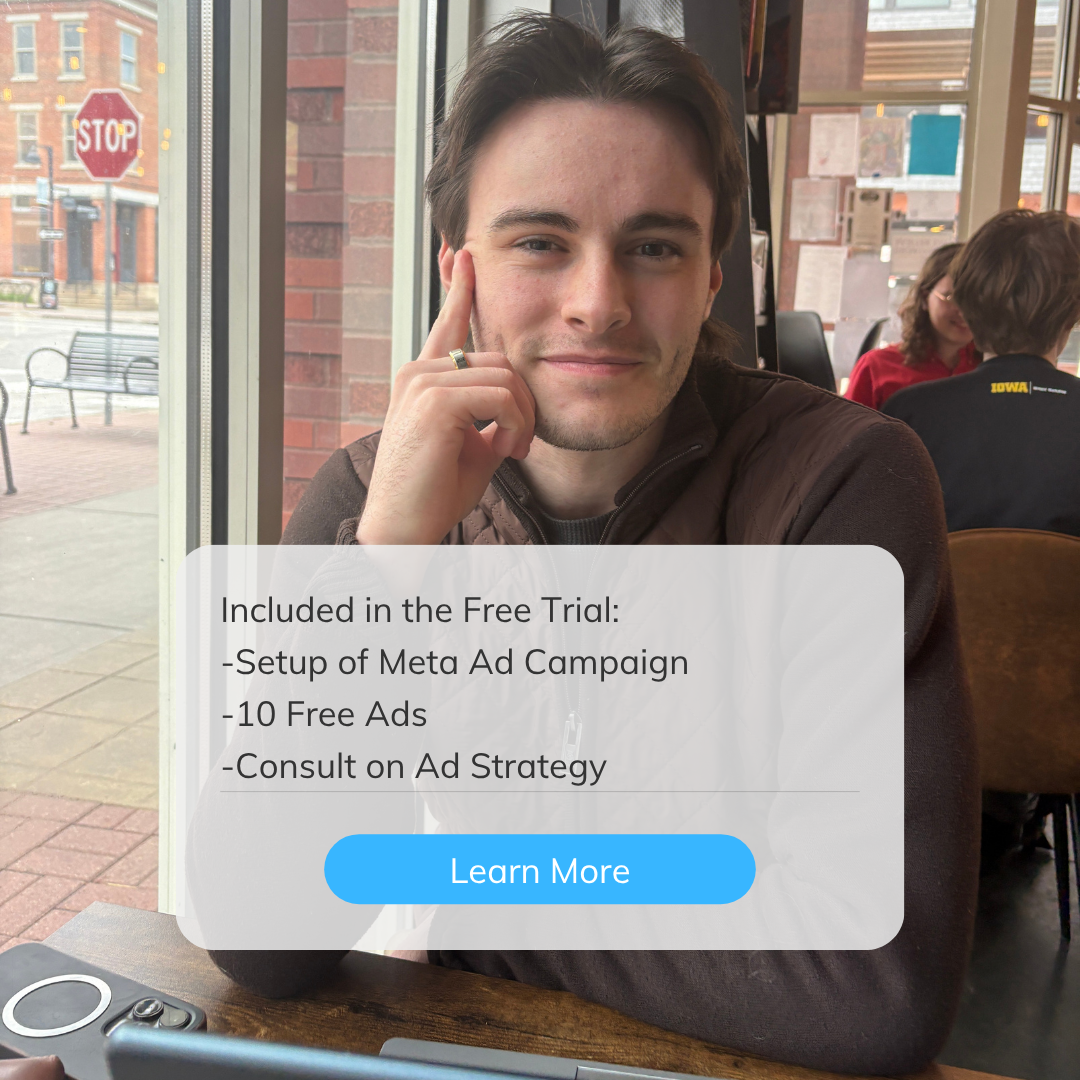
If this article got you thinking, but you want done-for-you Facebook ad management on a performance basis, check out Affilicademy.com.
They only get paid when your ads perform, and yes — there's a free trial so you can see it in action before committing.
And yes, we're partnered with them, so reading this article helps us pay the bills and keep these guides free for you.
FAQ
What is creative strategy for Meta ads in 2026? Creative strategy for Meta ads in 2026 refers to the structured design of ad content — including the hook, on-camera ICP representation, copy, and visual quality — to generate behavioral engagement signals that guide Meta's Andromeda algorithm toward the correct buyer audience. It has replaced manual interest targeting as the primary audience selection mechanism on the platform.
How does creative strategy differ from interest targeting on Meta? Interest targeting applies demographic and behavioral filters to restrict the algorithm's delivery pool. Creative strategy works with the algorithm by providing high-quality engagement data that Andromeda uses to self-select audiences. Interest targeting limits the algorithm's access to buyer signals. Creative strategy expands it by giving the system better inputs to work with.
What is a good ad hit rate for Meta ads? A well-structured creative system should produce a hit rate between 15% and 35%. Hit rates below 10% indicate problems with ICP definition, messaging, or creative structure. The commonly cited industry benchmark of 2% reflects poorly structured systems, not a universal standard.
How many ads should I test per week on Meta? Testing volume is determined by your hit rate and required winning ad output: Required Tests = Desired Winners ÷ Hit Rate. A business targeting five winning ads per week at a 20% hit rate needs twenty-five tests per week. Testing volume must increase proportionally as ad spend increases, to prevent creative fatigue from degrading CPA.
Does broad targeting work better than interest targeting on Meta in 2026? Broad targeting consistently outperforms interest targeting in accounts with sufficient pixel data and strong creative, under current algorithm conditions. Interest targeting constrains Andromeda's ability to find unexpected high-value buyer segments and slows the learning phase by limiting the behavioral data the system can access. Broad delivery with well-structured creative is the recommended default configuration in April 2026.
What is the Andromeda algorithm and how should it affect my ad strategy? Andromeda is Meta's current ad delivery system, operational since 2025. It processes large volumes of behavioral data to match ads with users most likely to convert. It functions most effectively under broad delivery parameters with high-quality creative. Narrow interest targeting reduces the behavioral signal volume Andromeda can access and degrades delivery efficiency. Ad strategy in 2026 should be built around providing Andromeda with strong creative inputs rather than attempting to direct delivery through manual audience controls.
How do I improve my creative hit rate on Meta ads? Hit rate improves through four levers: clearer ICP definition that produces more specific creative, structured testing across levels of awareness rather than uniform creative for all buyers, isolated variable testing to identify winning patterns, and systematic iteration that applies learnings from winning creatives to subsequent batches. Hit rate below 10% requires structural diagnosis — not incremental adjustment.